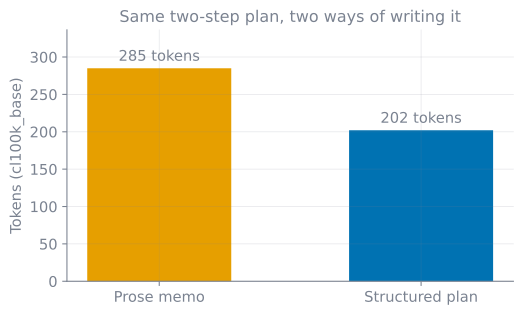
Plans an Agent Can Actually Execute
If you want a language model to carry out a plan, write the plan for a machine: XML-tagged structure, atomic find/replace edits, patterns defined once, and a verification checklist baked in.
If you want a language model to carry out a plan, write the plan for a machine: XML-tagged structure, atomic find/replace edits, patterns defined once, and a verification checklist baked in.
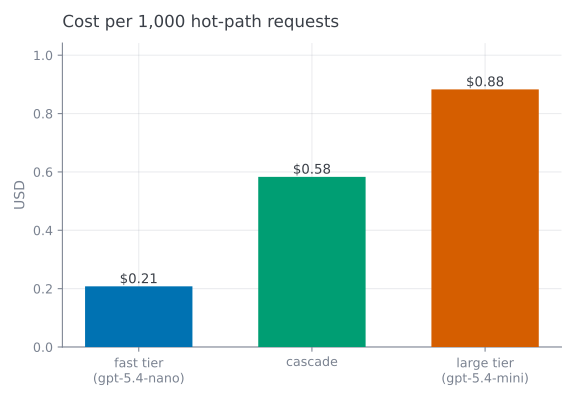
I benchmarked a tiered LLM safety gate with 800 real API calls: a fast model on the hot path, a larger one for the cases that need reasoning, plus circuit breakers and a caution-biased fallback. The measurements upended my reasons for tiering. On current models the fast and large tiers run at nearly the same speed, so the real payoffs are cost and, more importantly, catching the emergencies the cheap model quietly gets wrong.
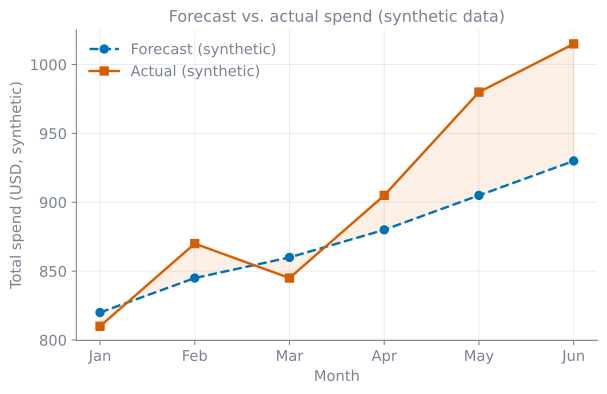
A generic assistant can't personalize. Pair a vector store for semantic recall with a persistent working-memory profile, and an agent starts to actually know the user: their categories, budgets, and anomalies.
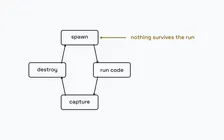
A practical look at sandboxing the code a language model writes — the threat model, the isolation options, and a minimal Docker setup you can build on.