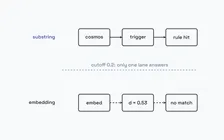
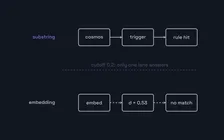
My bookkeeping assistant had my personal filing quirks hardcoded into its system prompt. The fix wasn't a bigger prompt: it was storing each learned rule as a pgvector embedding and retrieving it by similarity at registration time.
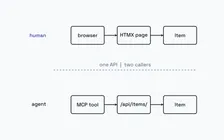
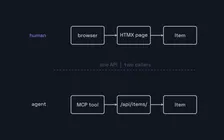
I built a vault so a skill or an agent could store structured items without me rewriting the domain each time. That meant designing the DRF API for a non-human caller: stable UUIDs, an open metadata field, and a discoverable OpenAPI schema. Then I probed it for idempotency and found I never built any.
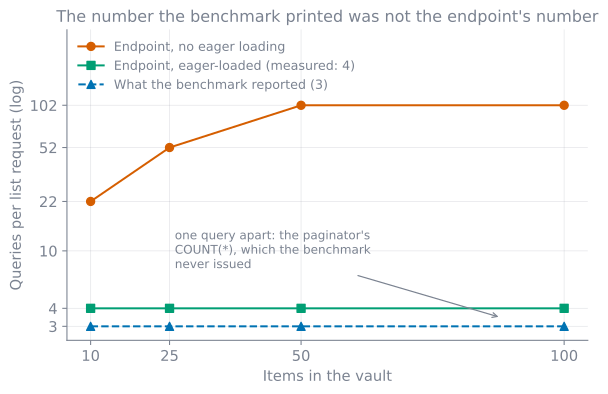
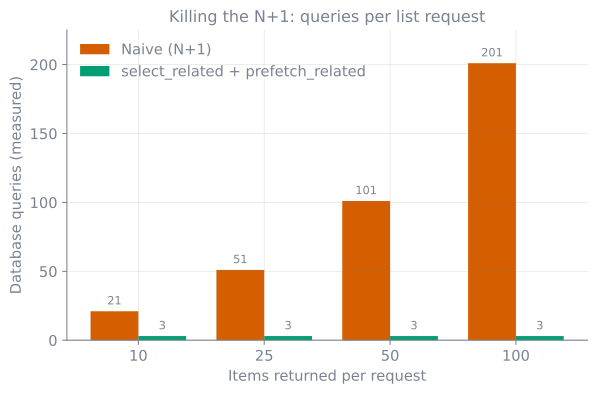
I wrote a benchmark to prove my vault API's eager loading worked, charted it, and published it. Five weeks later I deleted the eager loading from the viewset to watch the benchmark go red. Fifteen tests passed in 4.67 seconds and the benchmark cheerfully printed the same flat line.
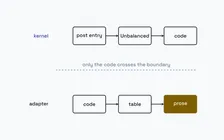
An accounting kernel that must never say a word to a user. Every domain failure gets a typed exception and a stable machine code; one adapter table turns that code into localized prose. Here's the hierarchy, the import cycle it caused, the contract check that reported green through a hole, and the bug I found writing this.
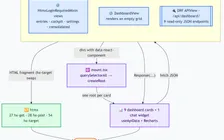
Not every page earns a client-side framework. In my expense tracker, HTMX drives the CRUD-heavy pages and React islands power only the analytics dashboard and chat widget. Here's the rule I use to decide which gets which.
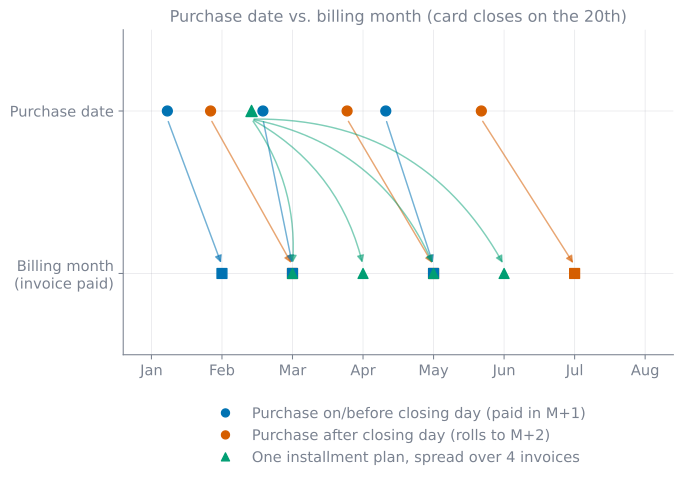
The day you swipe a card is not the month you're accounting for. Here's how I modelled credit-card billing cycles as a pure function, applied it in one save hook, and used an irreversible migration to stop a future rule change from rewriting the past.
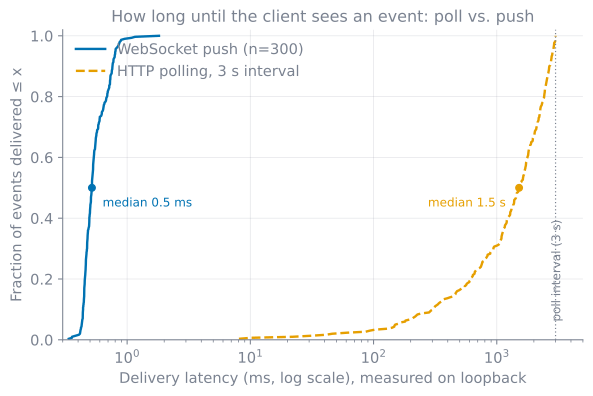
The Django ORM is synchronous; an AsyncWebsocketConsumer is not. database_sync_to_async is the wrapper that bridges them. How Channels' async consumers and channel-layer groups broadcast to every connected client, and where the ORM boundary actually sits.
Storing recipes, bookmarks, journals and groceries behind a single REST surface: a polymorphic Item base, dynamically composed nested serializers, atomic multi-table writes, and the eager-loading that kills the N+1 queries.